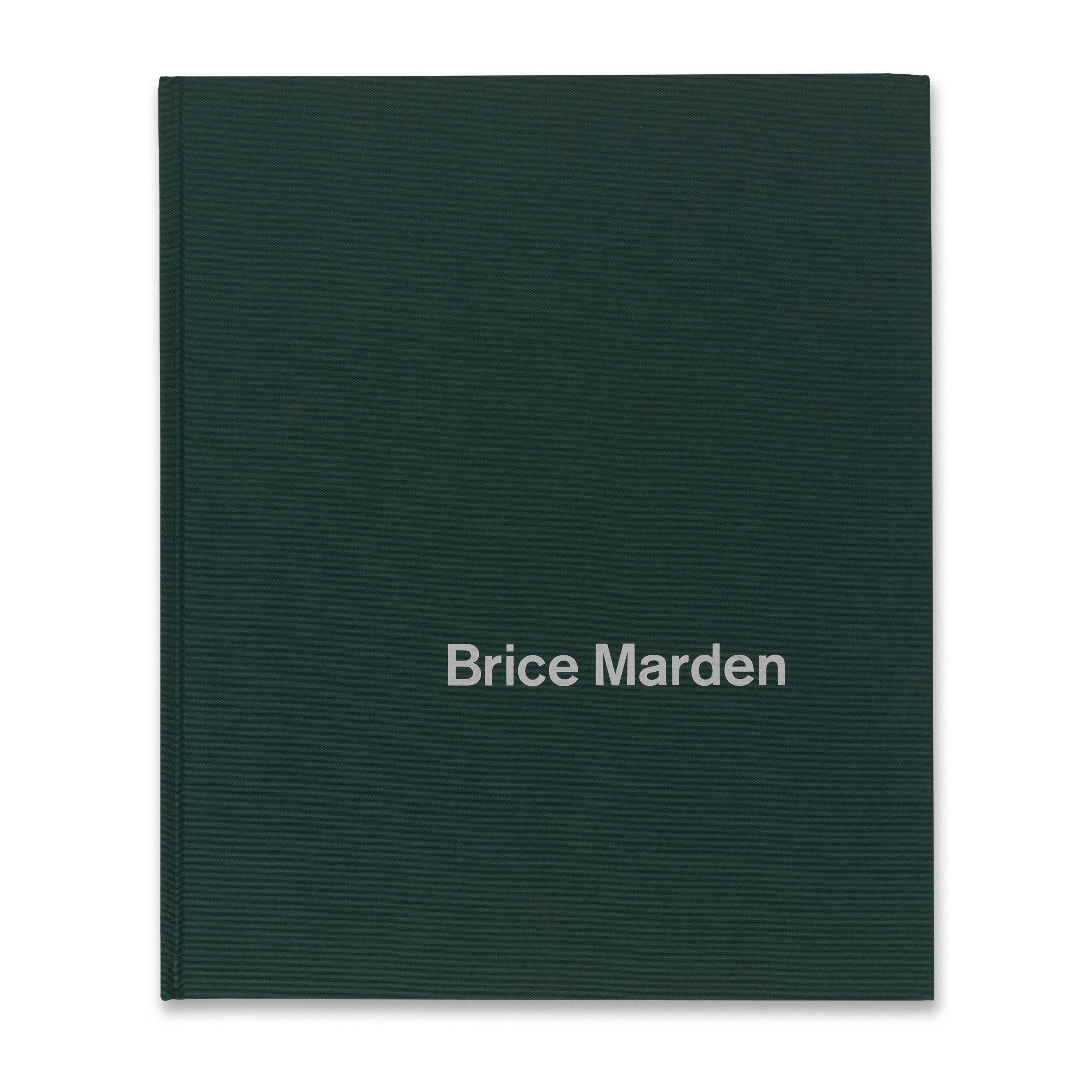
Brice Marden: The Grove Group
This book was published on the occasion of the exhibition Brice Marden: The Grove Group at Gagosian, 980 Madison Avenue, New York. Following a trip to Greece in the early 1970s, Marden developed a unique method of adding beeswax and turpentine to oil paint and applying the mixture in multiple thin layers to heighten the effect of each color, plane, and brushstroke in a painting. He employed this technique in the abstract Grove Paintings (1972–76), a series that also represents his first use of terre verte (green earth), an iron silicate clay pigment. These were exhibited—and are documented here—alongside three related collages (the Grove Addenda) and five gridded drawings (the Grove Group).
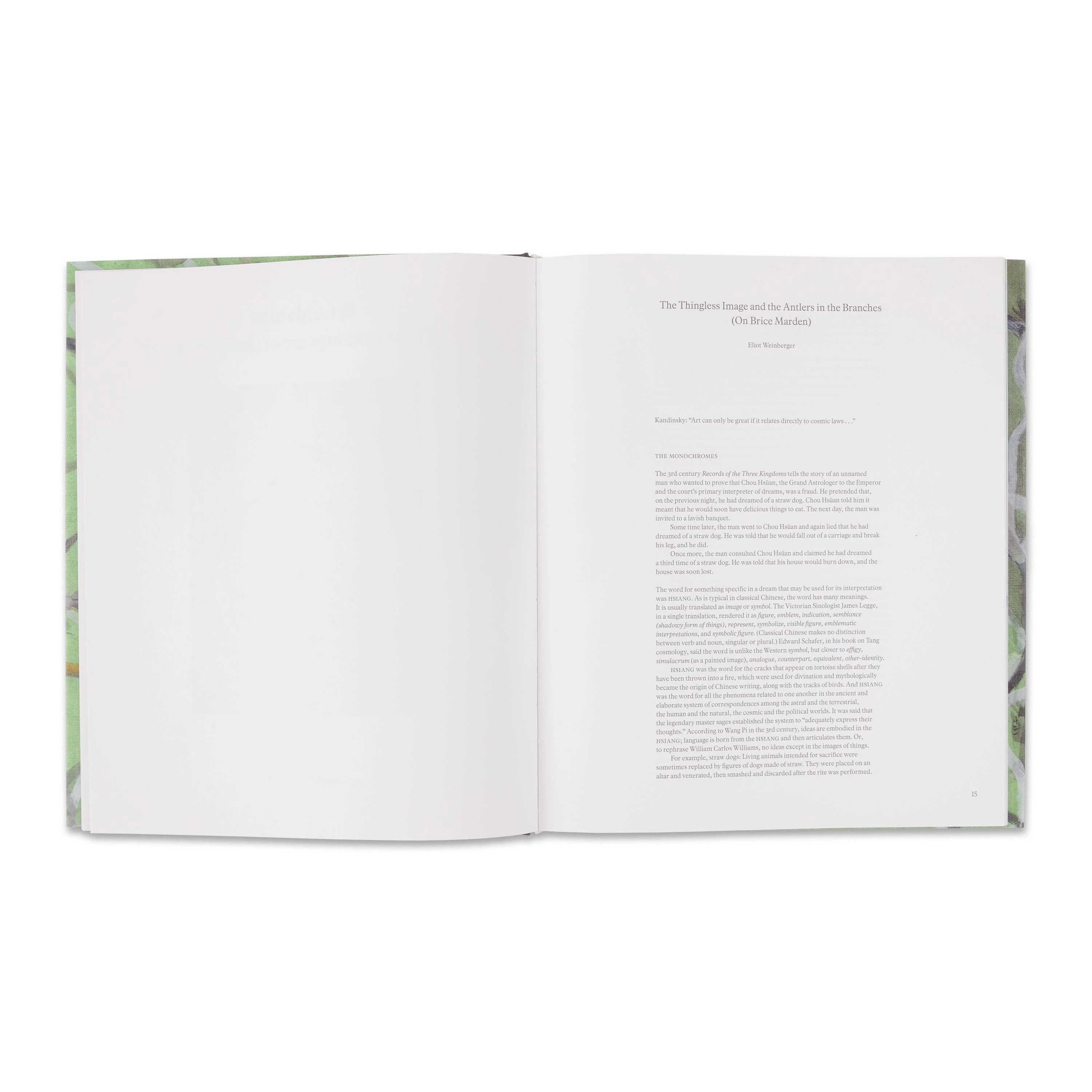
In addition to these works, the catalogue reproduces and transcribes pages from notebooks that Marden made prior to and in parallel with their production. An evocative introduction by art historian Robert Pincus-Witten explores the significance of these books, which record Marden’s aims and ideas alongside sketches and aides-mémoires, and illuminate their author’s association of Minimalist aesthetics with classical iconography.
Product Information
Product Information
Shipping & Returns
Shipping & Returns
Description
This book was published on the occasion of the exhibition Brice Marden: The Grove Group at Gagosian, 980 Madison Avenue, New York. Following a trip to Greece in the early 1970s, Marden developed a unique method of adding beeswax and turpentine to oil paint and applying the mixture in multiple thin layers to heighten the effect of each color, plane, and brushstroke in a painting. He employed this technique in the abstract Grove Paintings (1972–76), a series that also represents his first use of terre verte (green earth), an iron silicate clay pigment. These were exhibited—and are documented here—alongside three related collages (the Grove Addenda) and five gridded drawings (the Grove Group).
In addition to these works, the catalogue reproduces and transcribes pages from notebooks that Marden made prior to and in parallel with their production. An evocative introduction by art historian Robert Pincus-Witten explores the significance of these books, which record Marden’s aims and ideas alongside sketches and aides-mémoires, and illuminate their author’s association of Minimalist aesthetics with classical iconography.