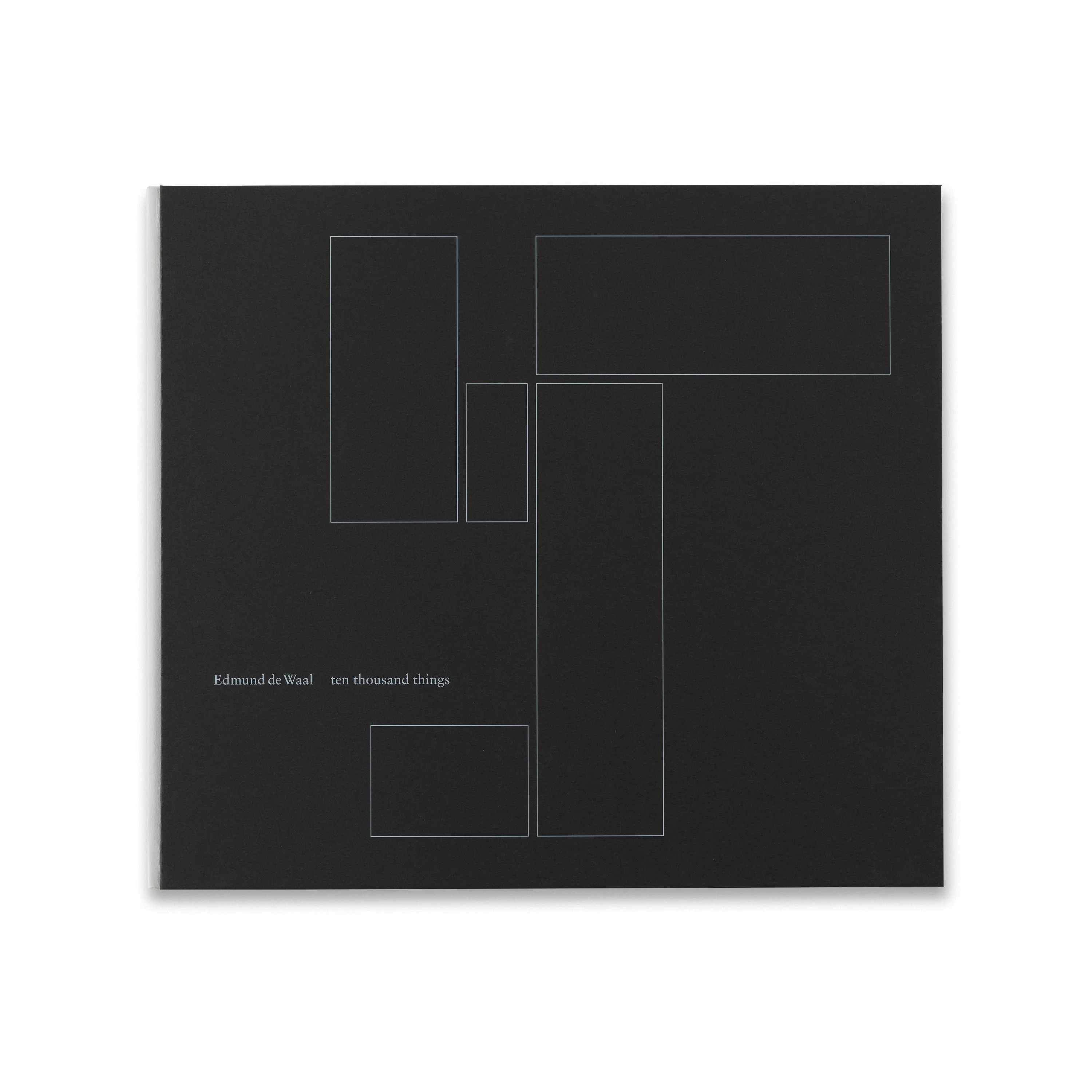
Edmund de Waal: library of exile
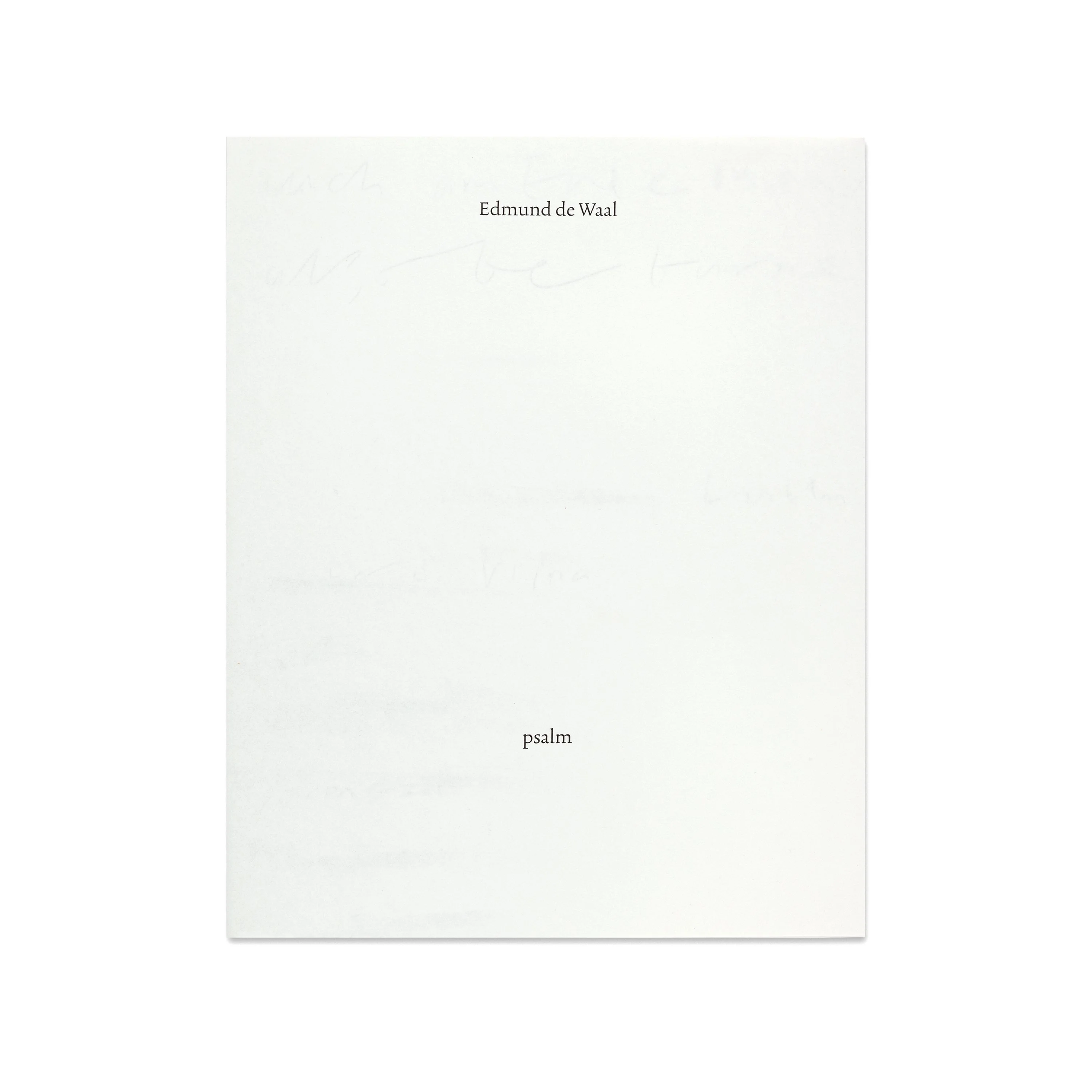
This book was published on the occasion of Edmund de Waal: library of exile at the British Museum in London. The exhibition featured a small library created by de Waal—and originally presented at the Biennale di Venezia in 2019—housing two thousand books written by exiled authors from Ovid’s time to the present day. The external walls of the library are inscribed with a text piece listing the lost and destroyed libraries of the world. Inside, embedded in the bookshelves, is a quartet of de Waal’s large-scale vitrines containing porcelain vessels and page-like brackets of steel.
A preface by author Elif Shafak reflects on the importance of literature and its capacity to transcend languages and borders. The introduction by Hartwig Fischer, director of the British Museum, positions de Waal’s artwork within the wider context of the museum’s collection, highlighting the dialogue between objects across time and history. Lastly, a text by de Waal focuses on the work itself, its journey to the British Museum via Venice and Dresden, and its future role in the foundation of a new library at the University of Mosul in Iraq.
Product Information
Product Information
Shipping & Returns
Shipping & Returns
Description
This book was published on the occasion of Edmund de Waal: library of exile at the British Museum in London. The exhibition featured a small library created by de Waal—and originally presented at the Biennale di Venezia in 2019—housing two thousand books written by exiled authors from Ovid’s time to the present day. The external walls of the library are inscribed with a text piece listing the lost and destroyed libraries of the world. Inside, embedded in the bookshelves, is a quartet of de Waal’s large-scale vitrines containing porcelain vessels and page-like brackets of steel.
A preface by author Elif Shafak reflects on the importance of literature and its capacity to transcend languages and borders. The introduction by Hartwig Fischer, director of the British Museum, positions de Waal’s artwork within the wider context of the museum’s collection, highlighting the dialogue between objects across time and history. Lastly, a text by de Waal focuses on the work itself, its journey to the British Museum via Venice and Dresden, and its future role in the foundation of a new library at the University of Mosul in Iraq.