

Lichtenstein Expressionism
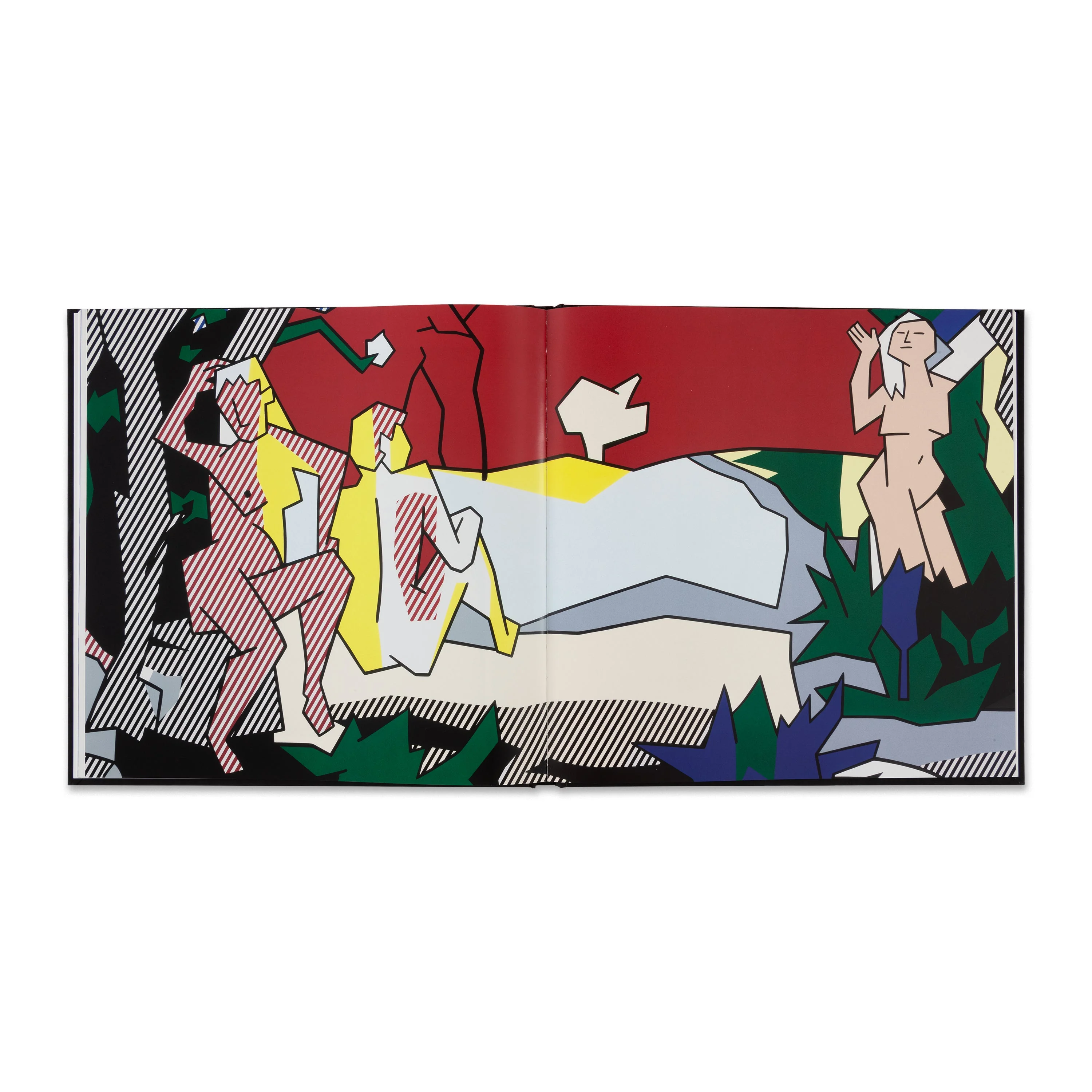
This book was published on the occasion of Lichtenstein Expressionism at Gagosian, rue de Ponthieu, Paris. This exhibition focused on Roy Lichtenstein’s series of paintings, drawings, prints, and sculpture from 1979 through 1984 that interpreted motifs from early twentieth-century German Expressionism. Referencing artists such as Ernst Ludwig Kirchner, Karl Schmidt-Rottluff, Otto Dix, Franz Marc, and Alexej von Jawlensky, Lichtenstein translated the angular compositions and modernist palettes of their landscapes and figure paintings into his signature Pop style.
The catalogue includes reproductions of all works in the exhibition, together with installation photographs; archival images of the artist in his Southampton, New York, studio; and a comprehensive section illustrating all the works in the series. An essay by Brenda Schmahmann considers the artist’s engagement with art history, detailing his parodies of movements from German Expressionism to Abstract Expressionism. Hans Ulrich Obrist and Mayen Beckmann discuss Lichtenstein’s work in relation to German Expressionism and its artists, with a focus on Beckmann’s grandfather Max Beckmann. A conversation between Ruth Fine and Sidney B. Felsen traces the development of Lichtenstein’s Expressionist Woodcut series (1980) with Gemini G.E.L.
Product Information
Product Information
Shipping & Returns
Shipping & Returns
Description
This book was published on the occasion of Lichtenstein Expressionism at Gagosian, rue de Ponthieu, Paris. This exhibition focused on Roy Lichtenstein’s series of paintings, drawings, prints, and sculpture from 1979 through 1984 that interpreted motifs from early twentieth-century German Expressionism. Referencing artists such as Ernst Ludwig Kirchner, Karl Schmidt-Rottluff, Otto Dix, Franz Marc, and Alexej von Jawlensky, Lichtenstein translated the angular compositions and modernist palettes of their landscapes and figure paintings into his signature Pop style.
The catalogue includes reproductions of all works in the exhibition, together with installation photographs; archival images of the artist in his Southampton, New York, studio; and a comprehensive section illustrating all the works in the series. An essay by Brenda Schmahmann considers the artist’s engagement with art history, detailing his parodies of movements from German Expressionism to Abstract Expressionism. Hans Ulrich Obrist and Mayen Beckmann discuss Lichtenstein’s work in relation to German Expressionism and its artists, with a focus on Beckmann’s grandfather Max Beckmann. A conversation between Ruth Fine and Sidney B. Felsen traces the development of Lichtenstein’s Expressionist Woodcut series (1980) with Gemini G.E.L.