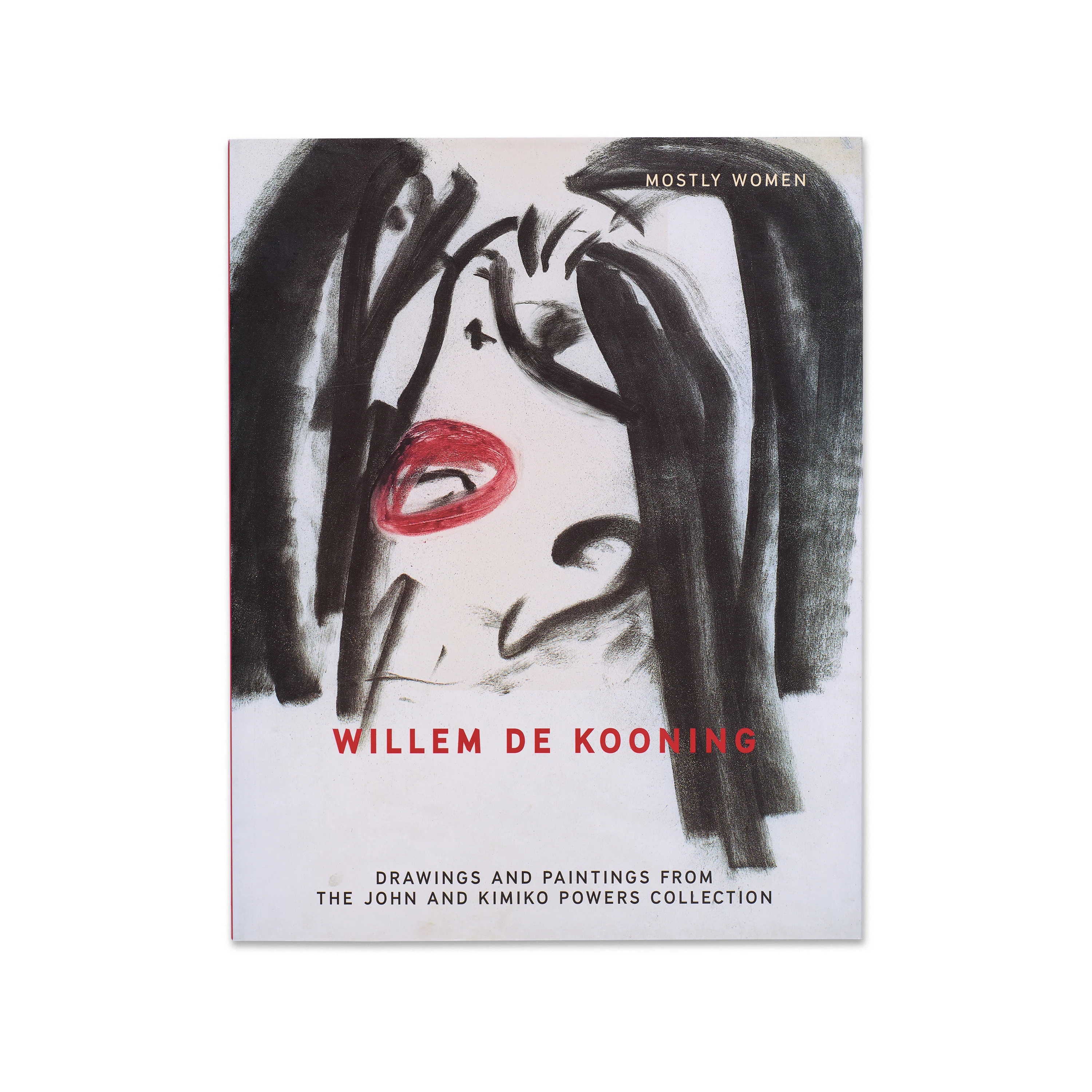



Willem de Kooning: Mostly Women: Drawings and Paintings from the John and Kimiko Powers Collection
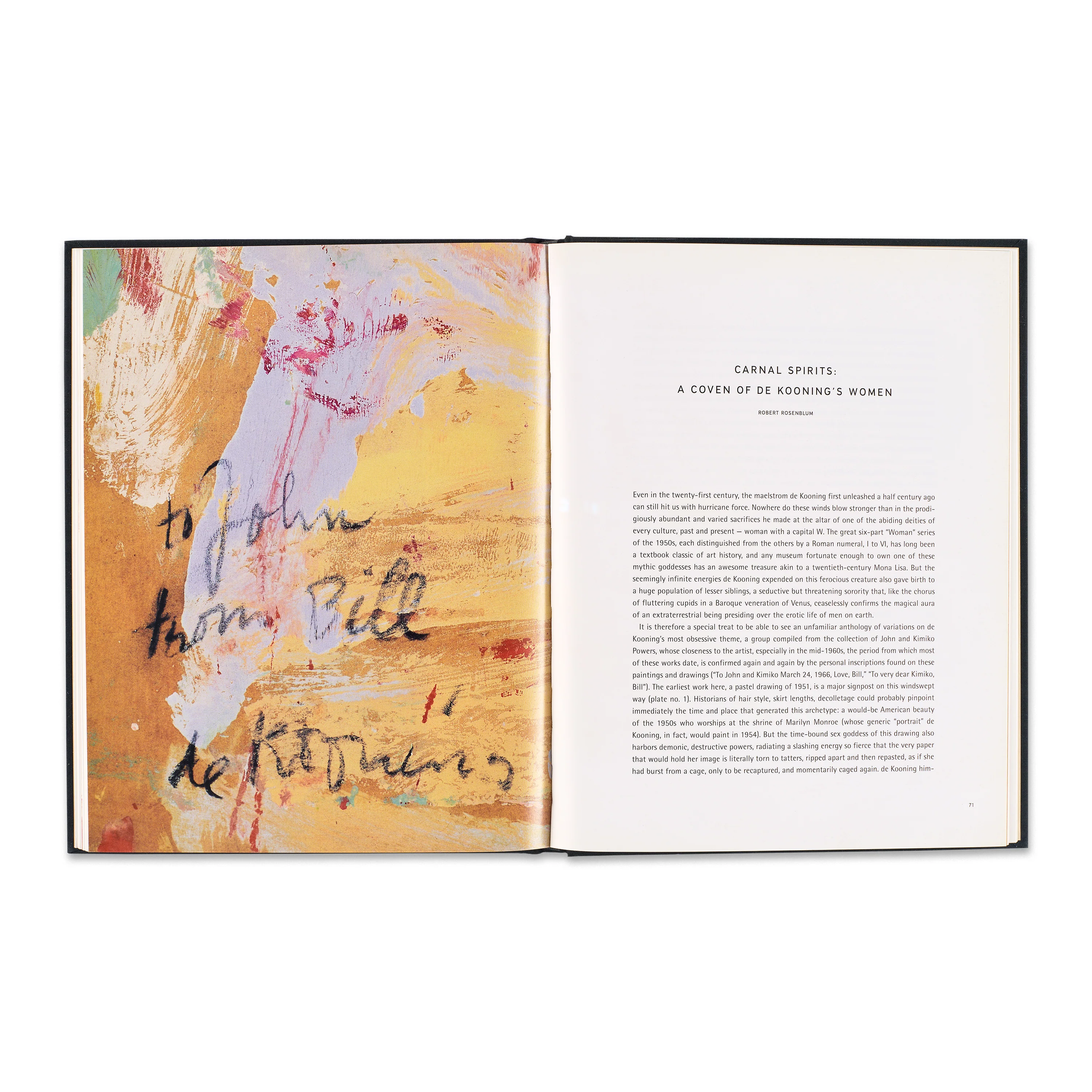
This book was published on the occasion of Willem de Kooning: Mostly Women: Drawings and Paintings from the John and Kimiko Powers Collection at Gagosian, 980 Madison Avenue, New York. The exhibition featured thirty-two works that were “mostly” expressionist portraits of women—de Kooning’s most celebrated subject—acquired in the mid-1960s, when the collectors established a friendship with the artist. The selection included a 1951 study for a portrait of Marilyn Monroe, a 1965 oil portrait titled Two Women, and The Artist in his Studio (Self Portrait), a characteristically expressive image from 1966 of the artist in the company of his feminine sitters.
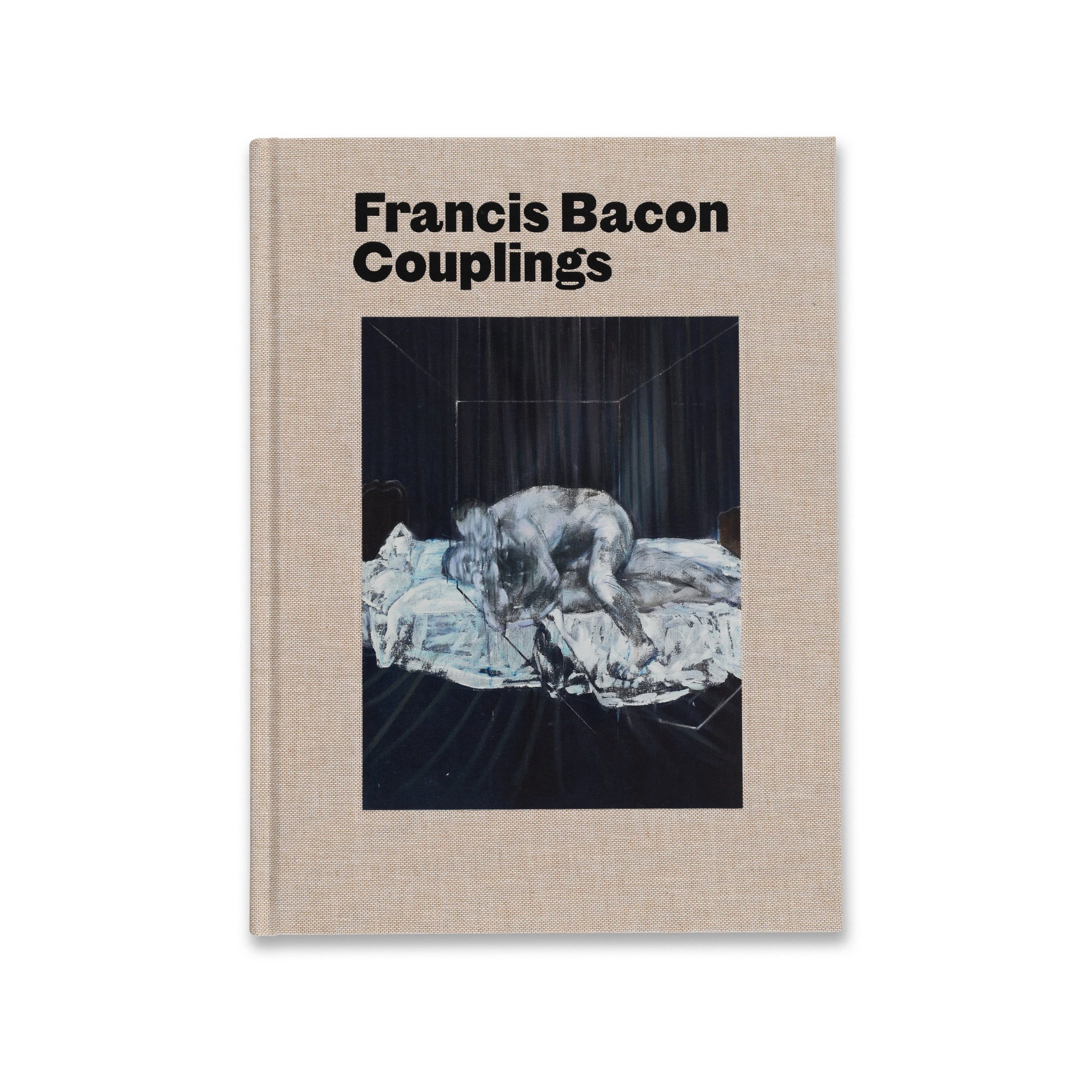
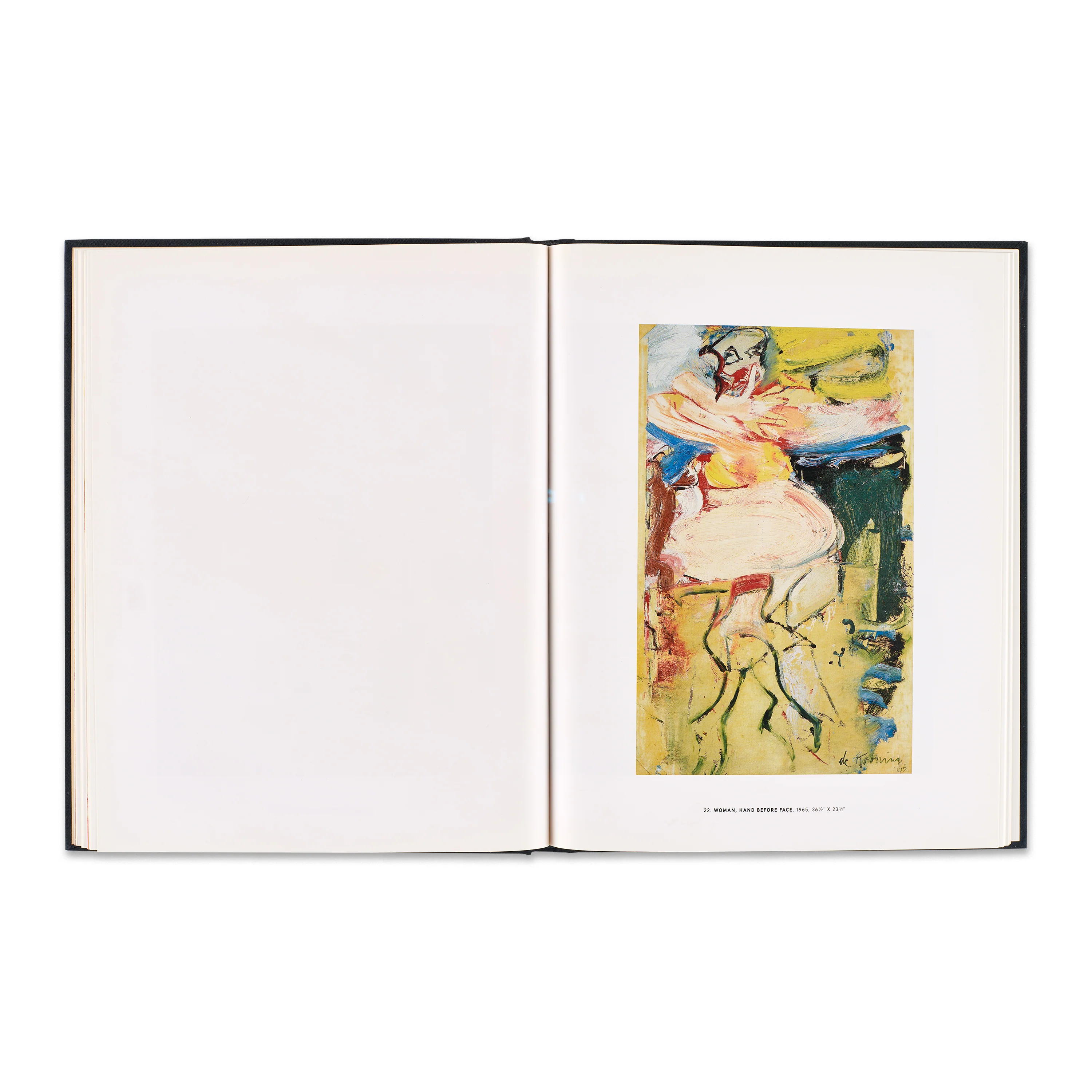
The catalogue illustrates the exhibition’s works in color and includes several details. It also features an introduction by Bob Monk, a conversation between Monk and Kimiko Powers, and an essay by Robert Rosenblum that explores the genesis and resonance of de Kooning’s corpus, tracing its thematic and stylistic overlaps with the work of other artists from Pablo Picasso to Francis Bacon and Jenny Saville.
Original: $60.00
-65%$60.00
$21.00Product Information
Product Information
Shipping & Returns
Shipping & Returns
Description
This book was published on the occasion of Willem de Kooning: Mostly Women: Drawings and Paintings from the John and Kimiko Powers Collection at Gagosian, 980 Madison Avenue, New York. The exhibition featured thirty-two works that were “mostly” expressionist portraits of women—de Kooning’s most celebrated subject—acquired in the mid-1960s, when the collectors established a friendship with the artist. The selection included a 1951 study for a portrait of Marilyn Monroe, a 1965 oil portrait titled Two Women, and The Artist in his Studio (Self Portrait), a characteristically expressive image from 1966 of the artist in the company of his feminine sitters.
The catalogue illustrates the exhibition’s works in color and includes several details. It also features an introduction by Bob Monk, a conversation between Monk and Kimiko Powers, and an essay by Robert Rosenblum that explores the genesis and resonance of de Kooning’s corpus, tracing its thematic and stylistic overlaps with the work of other artists from Pablo Picasso to Francis Bacon and Jenny Saville.